This was my first solo project outside of university. It spanned roughly 6 months and this was also my first attempt at a design document.
This game is a first person shooter which relies on the player to use different weapon modes to combat adversaries and navigate the level.
I handled everything from characters, levels and game design, 3D models in blender, linking animations, AI and more.
I wanted to further my Japanese studies by integrating it into this piece of work.
Aside from bilingual text I designed most elements on kanji i.e. the bells use 鐘 and enemies are designed with the kanji 夢.
My inspiration came from games such as 'Borderlands', 'Final Fantasy' and 'The Legend of Zelda'.
Overview
Problems and Solutions
The Player Character
Movement and traversal
I chose to design the level to best demonstrate the players movement capabilities.
I added mechanics seen in various modern shooter games such as mantles and the wall run in 'Titanfall'.
This allowed me to gradually showcase these mechanics at the beginning in a safe environment, and build up the player's mastery over the course of the level.
The ability to mantle allowed the player to reach certain areas and allowed for interesting platforming sections by chaining wall jumps to them.
Combat
My primary challenge was to implement weapon abilities that would have their own purpose both inside and outside of combat.
I concepted two weapons, the gun and katana. I wanted to have a maximum of four modes on each usable weapon.
I questioned what abilities do I give them, how can they be used in and out of combat, what about health, are they fun to use?
Both weapons needed a primary firing/attack mode, which was the easiest to implement and the foundation that the rest were built on.
I needed to show the player what ability they had equipped and what ability they should use in the environment.
Therefore, I incorporated tutorials. When the level required the player to use a new ability for the first time, I implemented UI. Each ability had a colour to signify this.
Most abilities had durations and cooldowns, which needed to be implemented to balance and encourage the player to switch modes.
Each weapon would have three modes unlocked by default and the fourth would be an ultimate ability unlocked through a quest, creating meaningful reasons to do side content.
These ultimate skills were developed in a way that was interesting to use but also weren't required to finish the game.
The Gun
The Gun's modes are, Shoot, Chargeshot, Barrier and Shinkansen (Bullet Train in Japanese).
Shooting would be used as the primary form to defeat enemies. Killing certain enemies would unlock the next room or a portal.
Chargeshot, like shooting, could be used to defeat enemies. However, it could also be used to destroy certain walls, signified by a red crack.
Chargeshot's damage value had a minimum and a maximum as the player could charge and expand the size of the projectile. The cooldown would be the same regardless.
Barrier was implemented as a method for the player to defend themselves but also recover health without including pick-ups.
The initial tutorial for Barrier pits the player against a turret in a hallway. After applying some damage and using the barrier they will see their health recover.
To use the Barrier outside of combat I used the 'Lens of Truth' from 'The Legend of Zelda'. This shows hidden objects when the Barrier is active.
Similarly to Chargeshot this has a duration and cooldown.
The Shinkansen is an ultimate ability which would have been unlocked through a quest, but was implemented and left in the final build.
I created a mechanic which when used encouraged mastery.
The player fires a remote controlled projectile, which collects enemies that it hits and then detonates when a timer has expired.
The mastery element was to increase time. On each occasion an enemy was hit the timer would regain some seconds extending the abilities use.
Due to the nature of it being an ultimate skill I included a longer cooldown.
I finally questioned, how does this ability affect bosses?
The player shouldn't be able to pick up and destroy a boss in a single hit. Applying a tag delivers a different outcome if it was a boss or an enemy.
Instead of capturing a boss it would merely detonate and cause a large amount of damage.
The Katana
The Katana's modes are, Attack, SoulShift, Counter and Dragon's Blade.
Similarly to how shooting is for the gun, attacking would be the primary method for combat.
SoulShift was inspired by 'Final Fantasy IV's Dark Knight Cecil'. This was to add a high risk, high reward ability.
Soulshift has three tiers. To activate this ability the player would charge their sword with dark energy, sapping their health in the process.
Tier 1 provides extra damage, Tier 2 adds a chance to fire a blade beam which does ranged damage and extra damage, Tier 3 more damage and always fires beams.
The player must switch from Soulshift back to Attack to use this ability's properties. If the player has low health they can use SoulShift to enter Tier 3.
The player can't attack whilst charging and will walk slowly. Although not yet implemented, one concept was to have certain doors open when the player's health was low enough.
Counter would act differently depending on the type of attack received. Firstly if hit by melee the player would knock-back and strike the instigator.
If the attack was a ranged projectile they would teleport to the enemies location and deal a counterattack.
I used a healing turret to showcase the Counter ability for the first time allowing the player to warp to progress.
Dragon's Blade originally was to be unlocked via a quest, but was implemented and left in the final build.
This ability has a long cooldown but essentially incorporated all three of the other abilities into one with none of the negatives.
Tier 3 Soulshift, an Auto-Counter and the Attack ability were combined into one ability.
Enemies and Bosses
I provided the player with enemies to utilise all of these abilities. Two enemies and turrets all provide similar functionality.
Bosses however, would be more complex. For example, the first boss, the Ronin, gives the player the Katana at the start and the battle won't initiate until the weapon is equipped.
If the player shoots the Ronin then he will reflect/parry the bullets encouraging the player to switch.
In the gallery section you can see the bosses functionality through gifs and videos.
Story and Level Structure
The level was split into four main sections, the Tutorial, the Garden, the Bridge and the Tower.
The game would introduce new mechanics as and when they were required to progress.
The Ronin boss was used as a way to challenge the player and throw them in the deep end with the Katana.
After this the Katana's skills such as the Counter were taught more efficiently in the Tower.
Gallery
Images
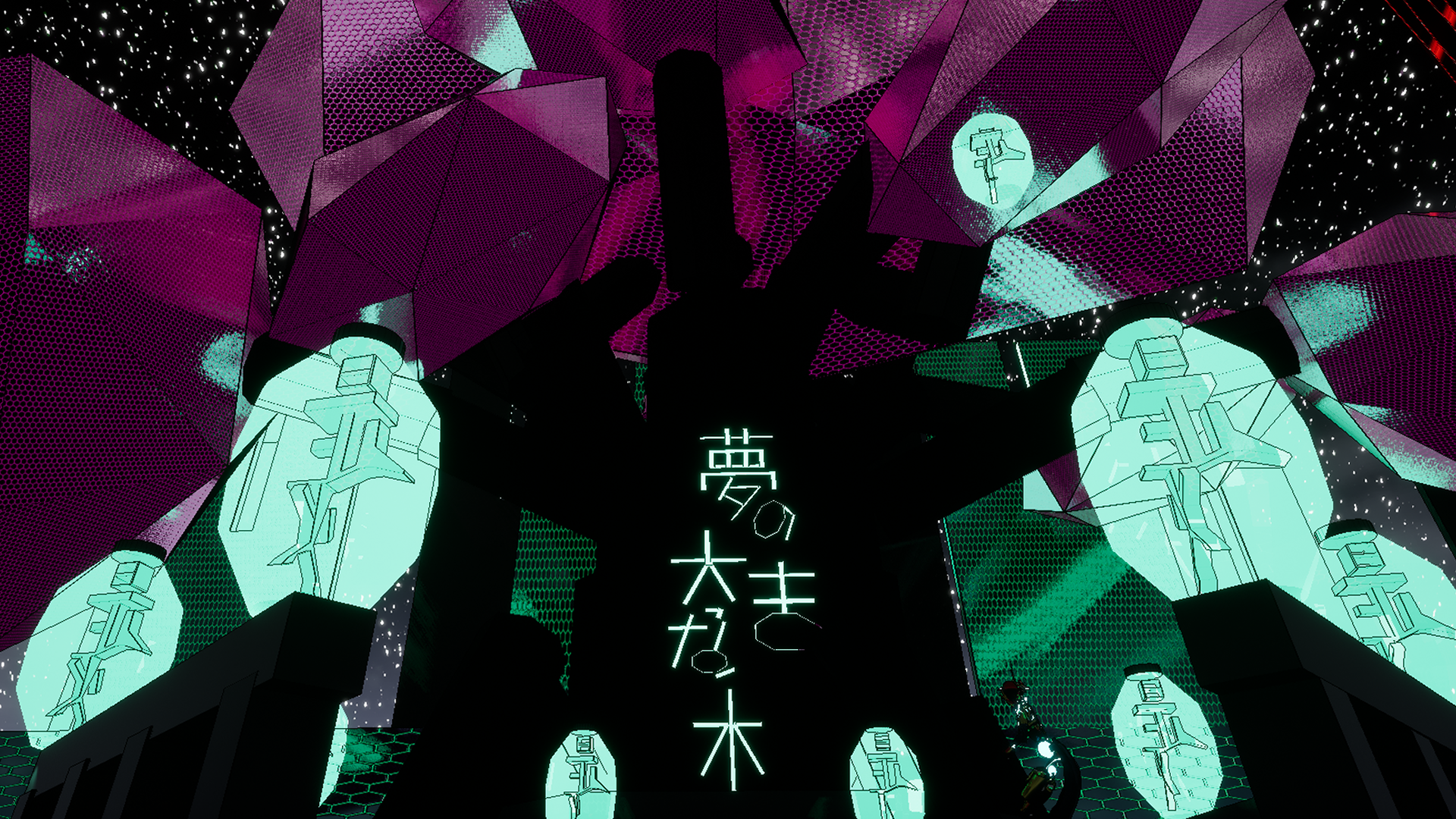
The Tree of Dreams.
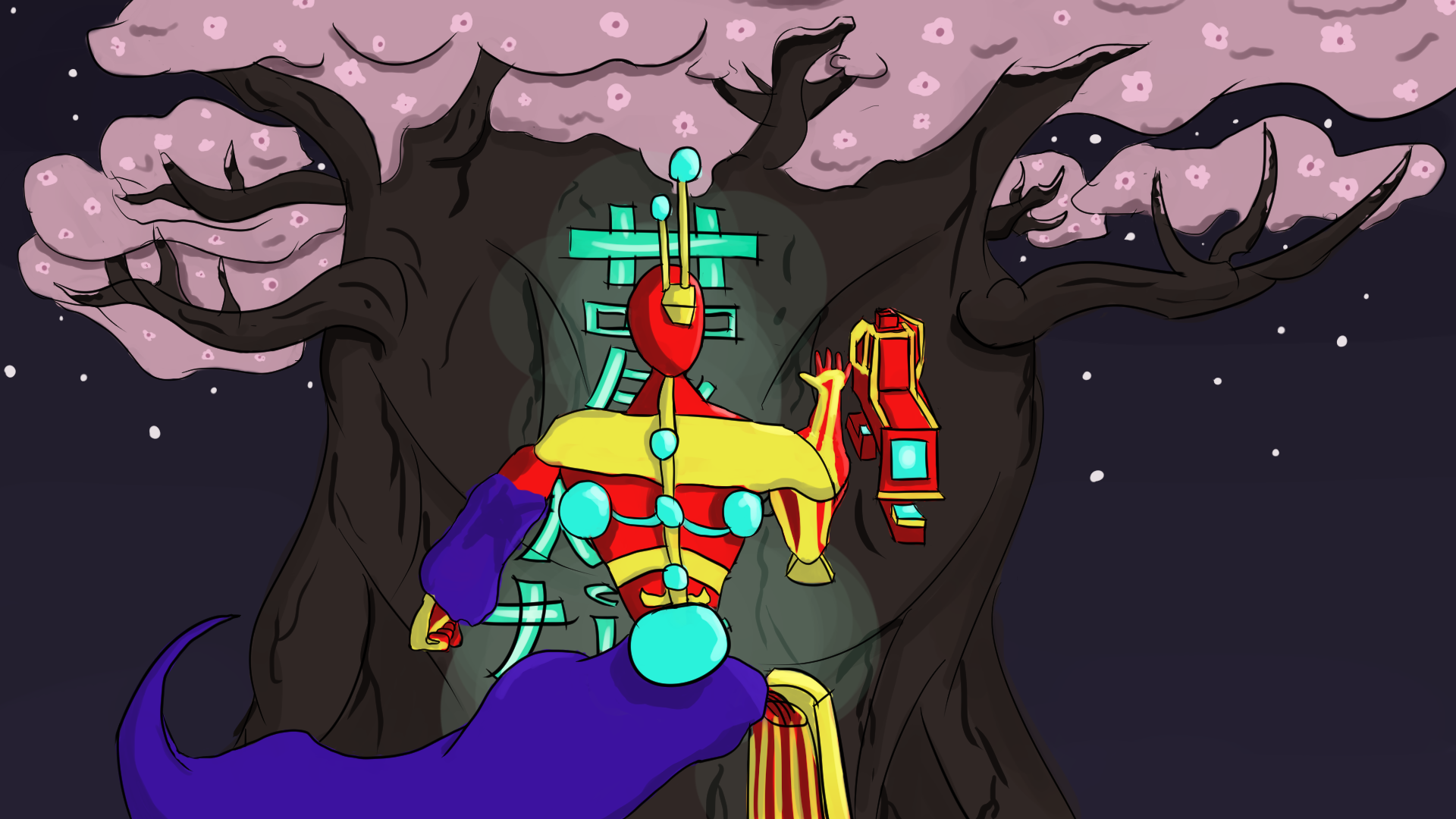
P_Disorder's Title Page.
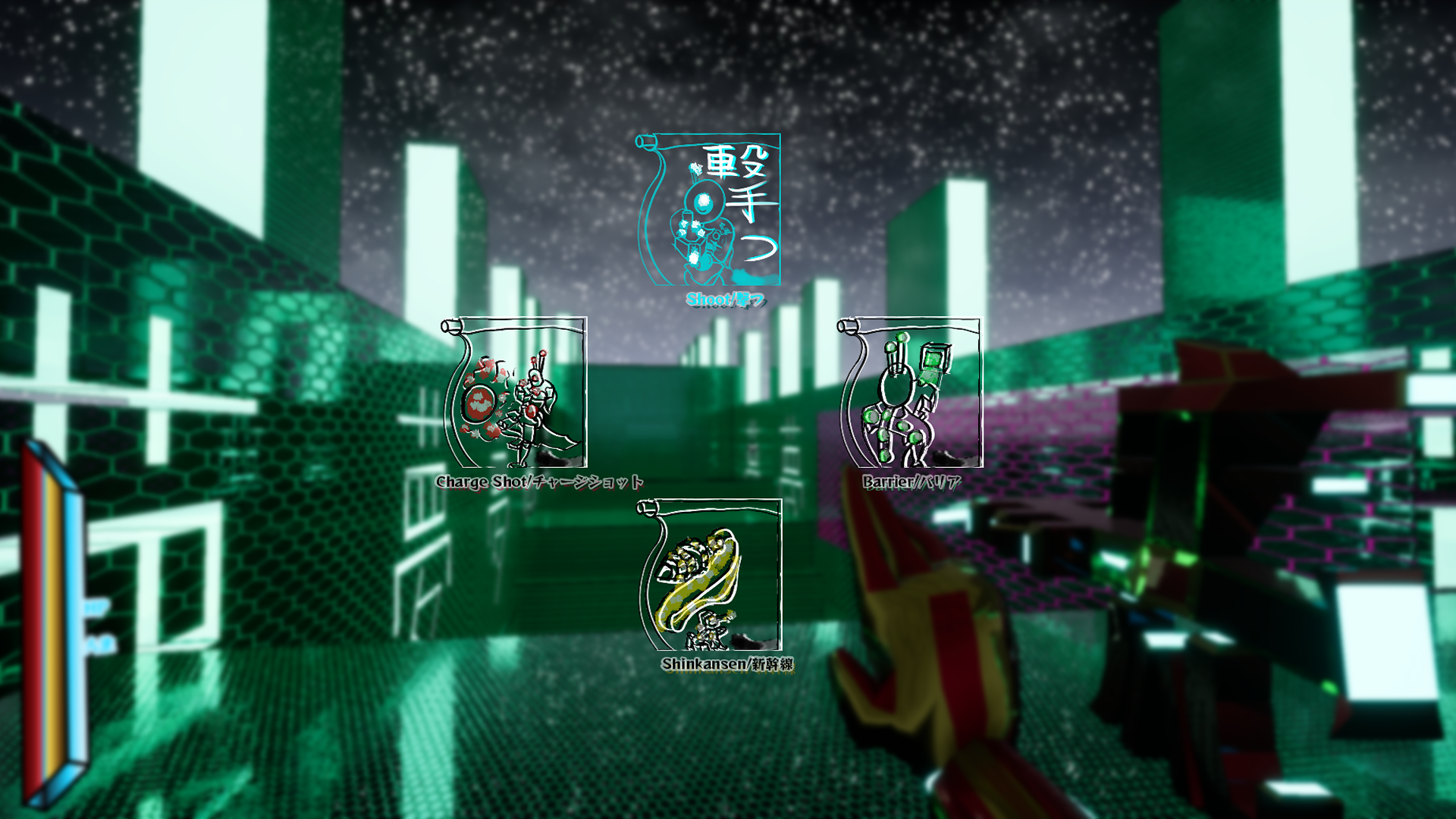
Gun UI showing four modes.
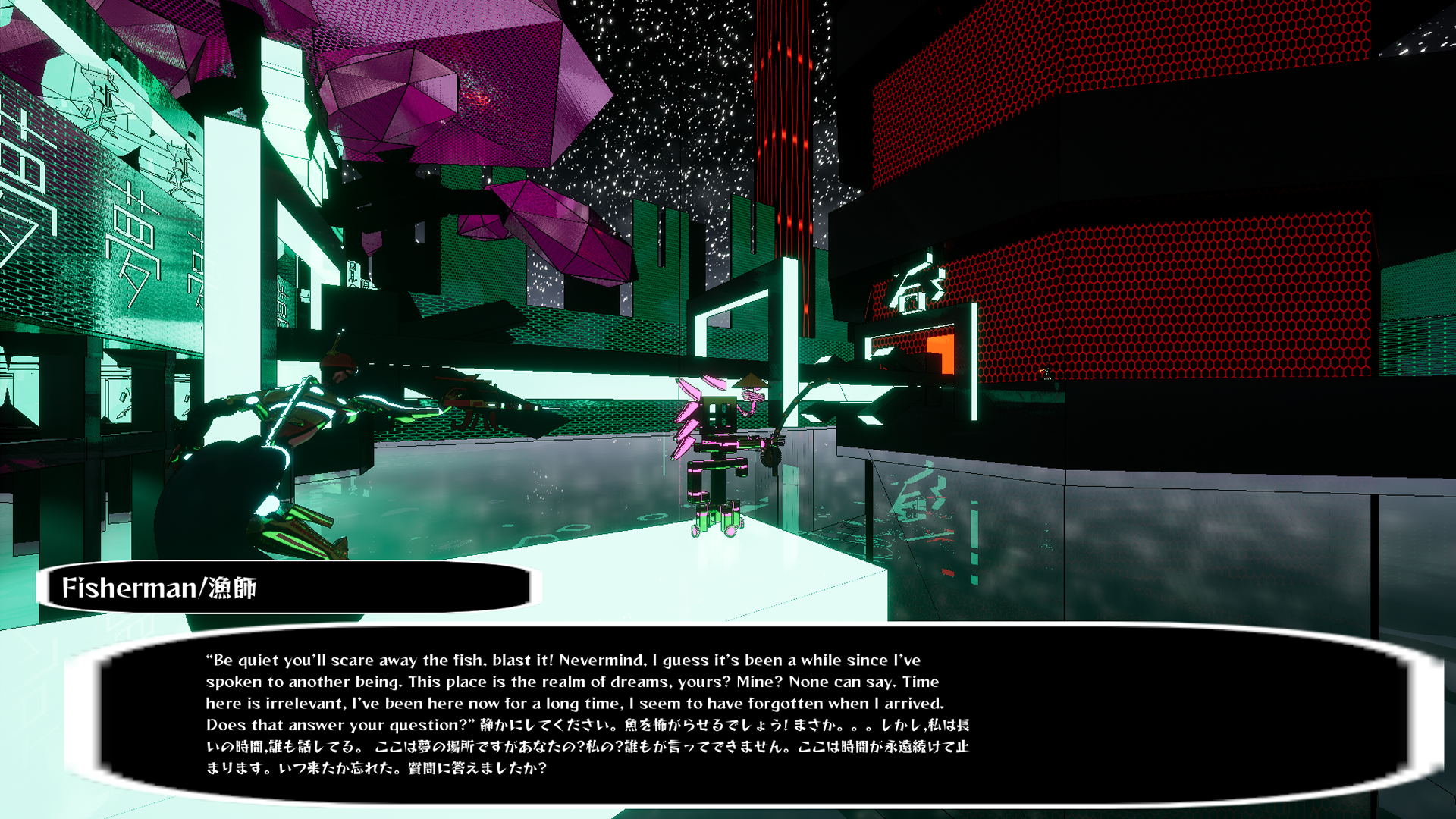
Speaking with the Fisherman.
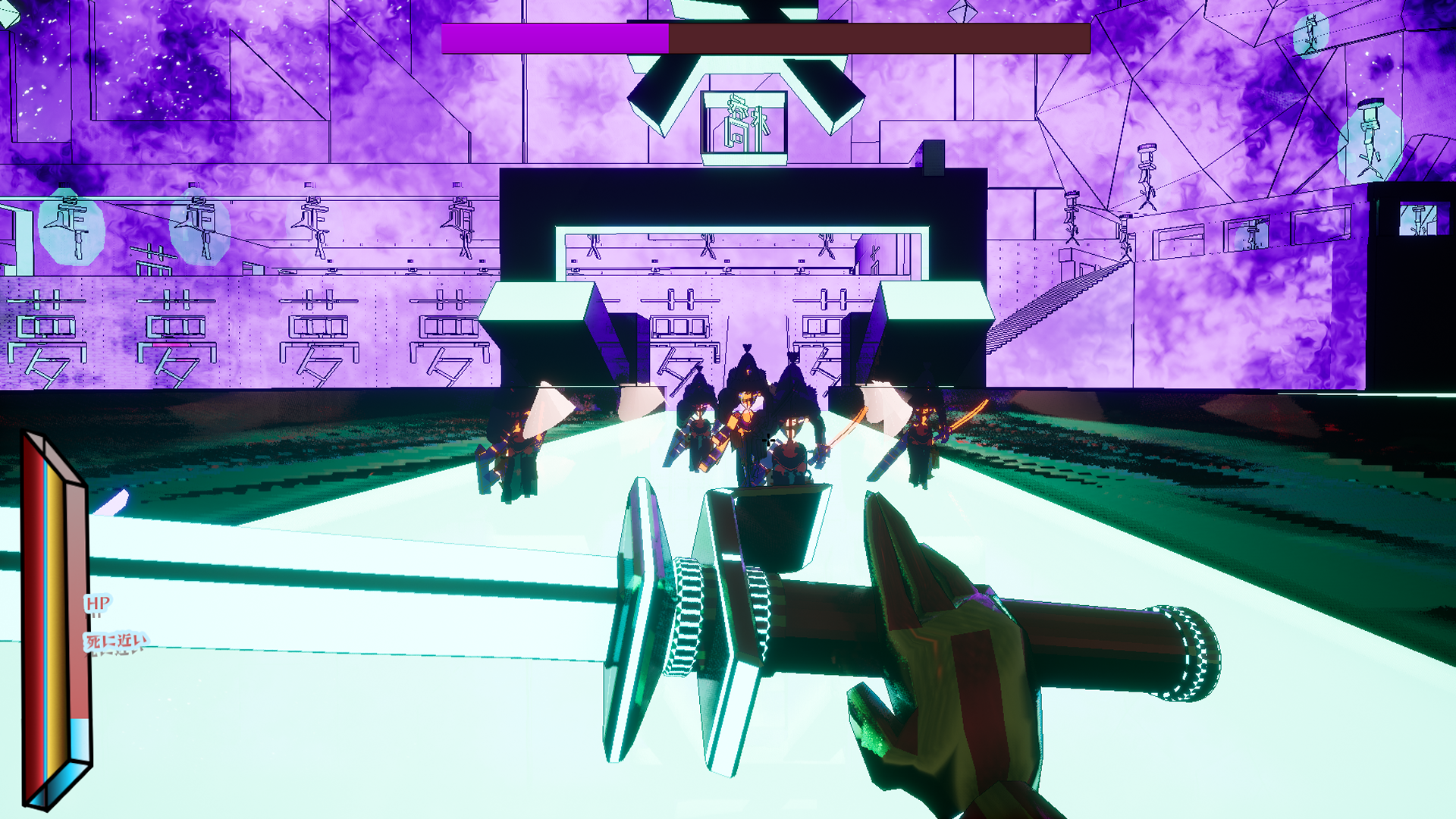
Battle with the Ronin.
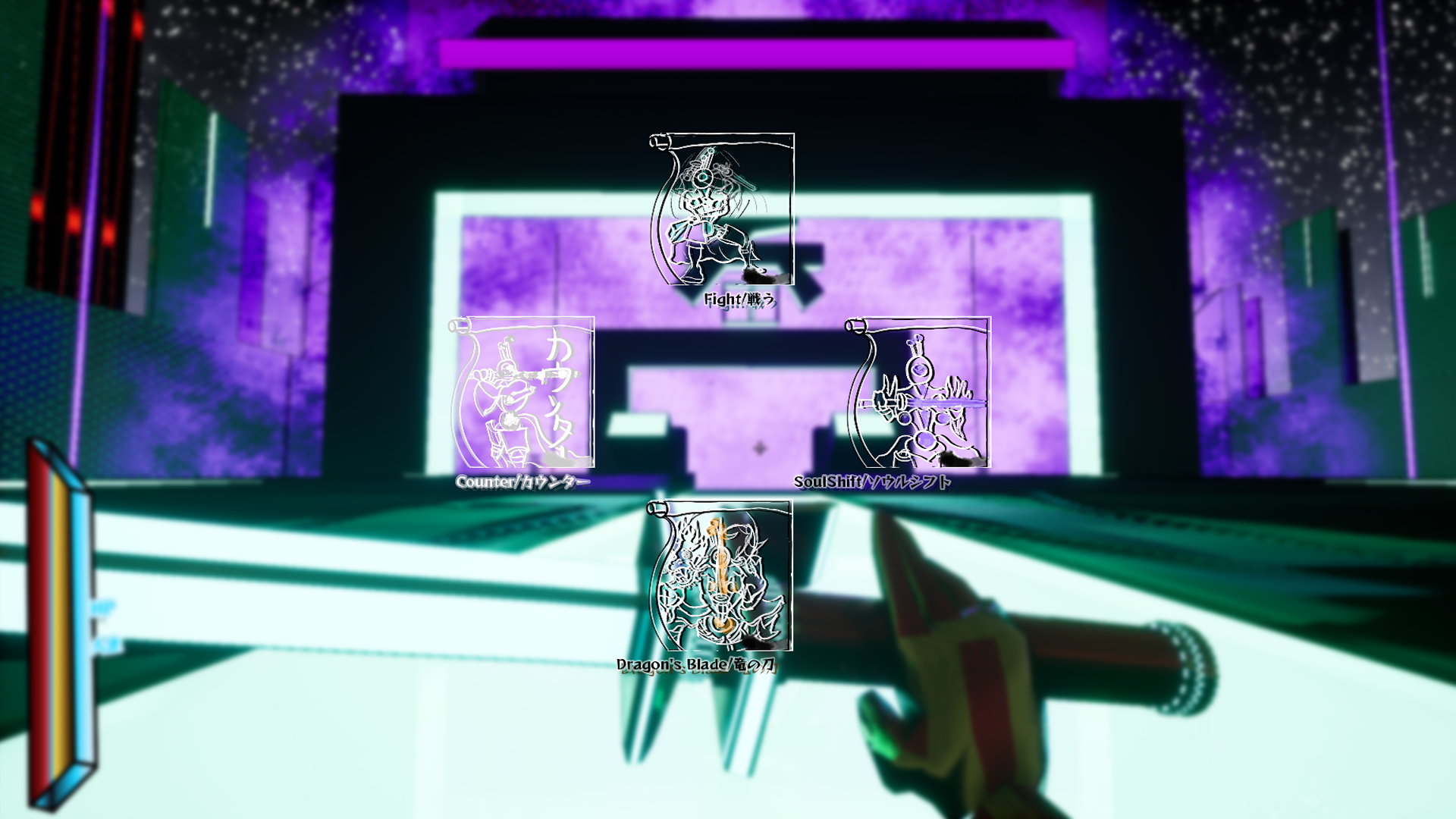
Katana UI showing the four modes.
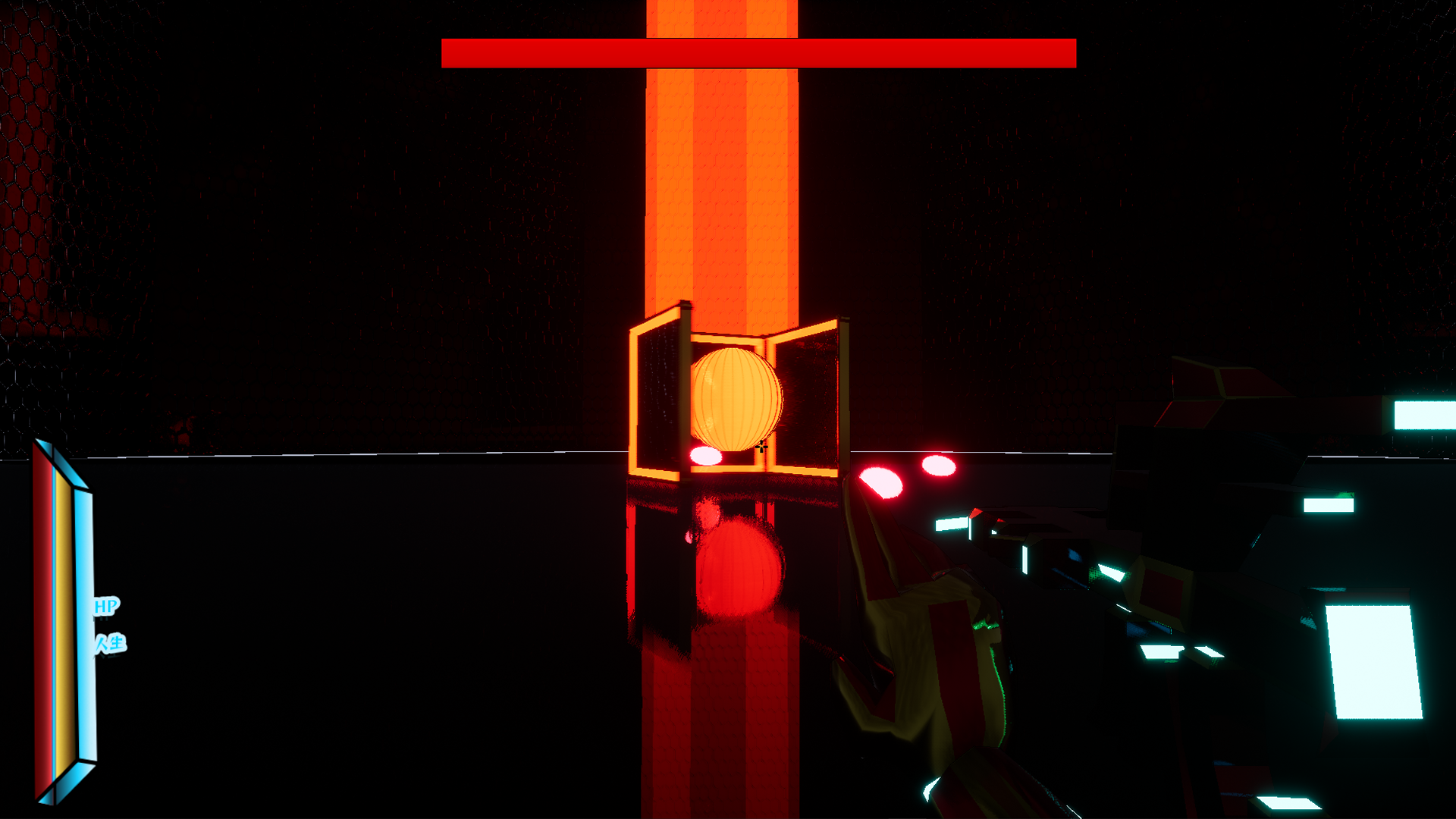
Battle with the Computer Guardian.
Gifs
Gun
Katana
Ronin/浪人
Computer Guardian (2nd boss)
Environment/Quests
Videos
Mechanics Overview Trailer
Full Playthrough
Synopsis/Demo
In this demo the player must make use of their combat abilities both in battle and to escape the Dreamscape.
The player has two weapons with four modes to utilise.
By defeating the bosses, new paths will open allowing you to complete your mission.